The churches of Naples

The churches, cloisters, chapels, catacombs, and monasteries of Naples

For more info:
www.inaples.it

TOURS OF NAPLES:

Tours of Naples itself:
• Naples City and Pompeii Half Day Sightseeing Tour
• Naples City Hop-on Hop-off Tour
• Small Group Naples City Sightseeing Tour

Tours to Pompeii & Vesuvius:
• Mt Vesuvius and Pompeii Day Trip from Naples
• Pompeii Half-day Trip from Naples
• Naples City and Pompeii Half Day Sightseeing Tour
• Mt Vesuvius Half-Day Trip from Naples

Tours to the Amalfi Coast or Capri:
• Private tour of Sorrento, Positano, Amalfi, and Ravello from Naples
• Capri Day Trip with Lunch from Naples

ReidsItaly.com Naples Map
View Larger Map


TOURS FROM TRUSTED PARTNERS

Intrepid Travel

G Adventures Travel

iExplore

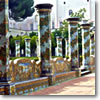
Il Chiostro di Santa Chiara** Santa Chiara - Santa Chiara is the most rewarding of Naples' churches, built in 1328 and half-destroyed by incendiary bombs in 1943. It was restored as best as possible to its Gothic state in 1953—complete with its famous and gorgeous majolica-plated cloisters... Full story

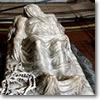
The Cristo Vellato in Sansevero Chapel** Cappella Sansevero - If you want the best example of how baroque can be both ludicrously over-the-top, hauntingly beautiful, and technically brilliant all at once, search out the nondescript entrance to one of Italy's most fanciful chapels. This 1590 chapel is a festival of marbles, frescoes, and above all sculpture—in relief and in the round, masterfully showing off the considerable technical abilities and intricate visual storytelling of a few otherwise relatively unknown Neapolitan baroque masters... Full story

* San Lorenzo Maggiore - The greatest of Naples' layered churches was built in 1265 for Charles I over a 6th-century basilica, which in turn lay over the remains of the ancient Greek and Roman cities (the foundations of the church are actually the walls of Greek Neapolis' basilican law courts.) The interior is pure Gothic, with tall pointed arches and an apse off of which radiate nine chapels. This is where, in 1334, Boccaccio first caught sight of Robert of Anjou's daughter Maria, who became "Fiammetta" in his writings... Full story

* Duomo (Cathedral) - The neo-Gothic facade of Naples' cathedral—built in the French Gothic style for Charles I in 1294 but rebuilt after a disastrous earthquake in 1456. The third chapel on the right is the sumptuous 17th-century Cappella di San Gennaro, elaborately frescoed by Domenichino and, later, Giovanni Lanfranco, who completed the concentric clouds of saints and angels spiraling up the airy dome to celebrate the city's patron saint and his miraculous blood... Full story

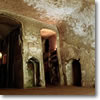
Catacombe di San Gennaro* Catacombe di San Gennaro - These wide tunnels lined with early Christian burial niches grew around the tomb of an important pagan family, but became a pilgrimage site when the bones of San Gennaro himself were transferred here in 5th century. Along with several well-preserved 6th-century frescoes there is a depiction of San Gennaro from the AD 400s whose halo sports an alpha and omega, and a cross—symbols normally reserved exclusively for Christ's halo... Full story

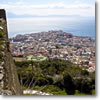
The view from the Certosa di San Martino* Certosa di San Martino - This 14th-century Carthusian monastery was baroqued in the 17th century, and is today famous for its fine church, peaceful cloisters, great views, small painting gallery, and remarkable presepio collection of Christmas crèches. What's more, the views across the city below from its perch atop Vomero hill are fantastic... Full story

Presepi di Napoli* Presepi (Christmas crèches) - These dioramas of the Nativity, which probably date back to St. Francis of Assisi in the 13th century but became most wildly popular here in Naples starting in the 17th century, are still an integral and important part of the Christmas season, assembled in church chapels and on piazze throughout Italy starting in November. Presepi seem to concentrate more on finely studied figures of peasants and townsfolk than the Holy Family itself... Full story

San Domenico Maggiore - This massive Gothic edifice was erected from 1289–1324, and rebuilt in the Renaissance and early baroque eras (when it received its prime attractions inside)... Full story

San Gregorio Armeno - The church was founded by devout 8th-century nuns who fled the persecutions in Byzantium, taking the relics of St. Gregory with them. But the baroque-era members of the sisterly order tended to be wealthy daughters of noble families, and so their church was decorated in a suitably rich rococo style... Full story

Tips


Related pages


   ShareThis

Intrepid Travel

Search ReidsItaly.com

This material was last updated August 2010. All information was accurate at the time.

about | contact | faq

» THE REIDSITALY.COM DIFFERENCE «

Copyright © 2008–2011 by Reid Bramblett. All rights reserved.