- Places
- Plans
- Itineraries
- Experiences
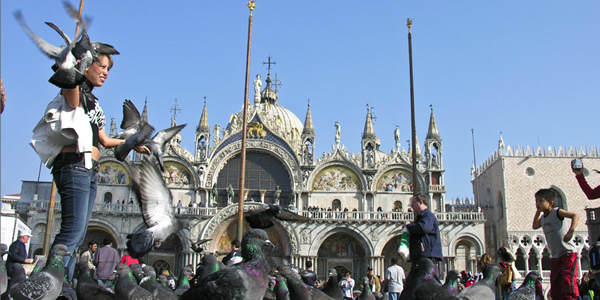
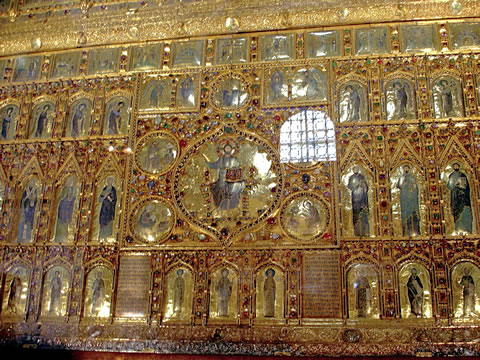
Built in the 11th century, St. Mark's guiding principle in architecture and decoration is Byzantine, but Romanesque and Gothic styles have left their mark as well over six centuries of expansion and decoration.
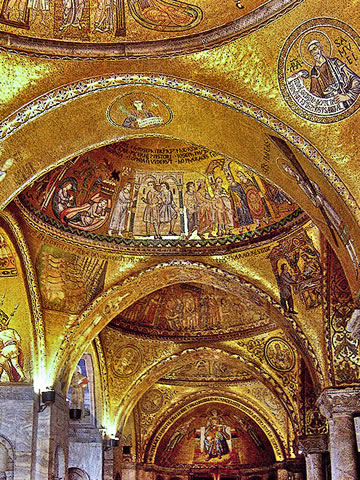
The atrium, ceilings, walls, and multiple domes are all encrusted with over 40,000 square feet of gold-backed mosaics crafted between the 12th and 17th centuries.
The oldest of these mosaics were created by Eastern masters, and later ones were based on cartoons by Tintoretto, Veronese, and Titian.
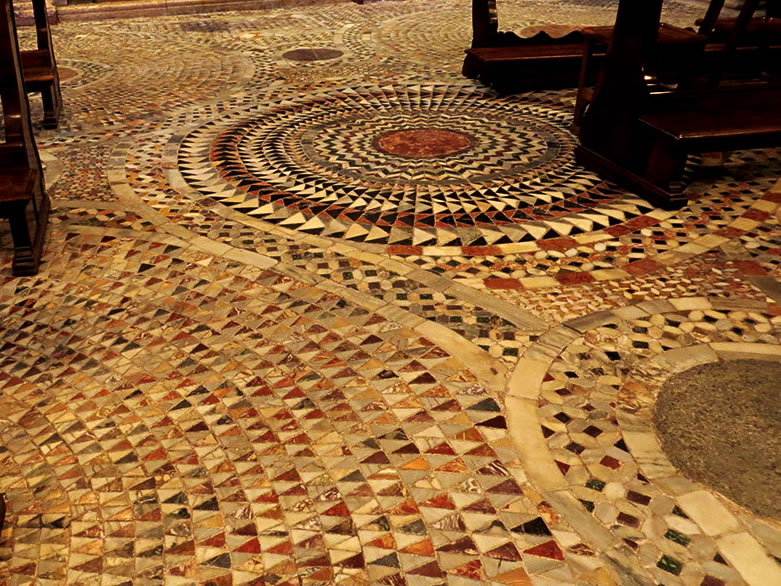
The church's most disappointing aspect is that it's so popular and its lines so long you are shuffled through like sightseeing cattle, kept moving along so the next batch of tourists can cram in. Still, your time inside will be unforgettable.
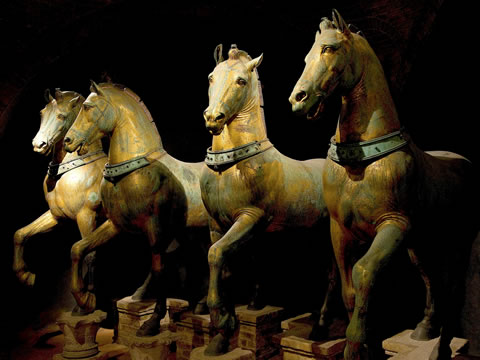
It also houses the original Triumphal Quadriga of four horses, replicas of which stride across the facade's roof.
These life-size bronze equines are one of Venice's treasures. Taken in 1204 from Constantinople during the crusades, their origin is murky, but they're at least ancient (AD 2nd century is the best guess), either Roman or Hellenistic.
Basilica di San Marco / St. Mark's Cathedral ★★★
Piazza San Marco
Vaporetto: San Zaccaria, San Marco-Giardinetti, or San Marco-Vallaresso
tel. +39-041-270-8311 or +39-041-522-5205
www.basilicasanmarco.it
Book a tour: Viator.com or Context Travel
Open 9:45am–5pm (Sunday 2–5pm, or 4pm winter)
» In winter, Museo di San Marco closes 15 min. before church; Pala d'Oro and Tesoro close 30 min. before church
Church: free
Museo, tesoro, pala d'oro: Small adm each
Planning your day: They'll try to shuffle you through in 20 minutes, but take your time, pop into the side chapels, behind the altar, and up to the Marciano Museum, sit on a pew and just admire the view, and plan to spend at least an hour to 90 minutes. Venice itineraries
San Marco Ground Rules:
Large bags are no longer allowed inside the basilica, and a free left luggage office has been established at Ateneo San Basso in Calle San Basso 315A on Piazzetta dei Leoni (to the left of the church facade).
Oddly (and terribly inconveniently), the bag drop opens after the basilica and closes early: Mon-Sat 10am–4:30pm, Sun 10am–4pm.
My favorite time to visit St. Mark's? On Sunday for the 6:45pm—for mass.
Mass? Yep. While the priest drones in singsong Latin at the altar, incense swirling around him from a swaying censor, you can sit in silence for an hour getting a crick in your neck.
That's because, only during the evening mass, the 40,000 square feet of glittering mosaics —which appear smoke-stained and shadowy by day—are illuminated to their full glittering glory. (They switch on the lights at other times, too, but this is the only reliable weekly one.)
Only one rule: Tourists are not allowed, so you must be discreet, arrive on time, stay in your pew, and sit quietly through to the end. Even if you are not devout (or not a Christian), this counts as a bona fide Italian cultural experience.
Though the lights are not switched on, regular masses are also held Mon-Sat at 7am, 8am, 9am, 10am, 11am, noon (except July-Aug), and 6:45pm, and Sunday at 7am, 8am, 9am, 10:30am, noon, 5:30pm (Vespers), and—the best, with illumination—6:45pm.
Sights nearby
★★★ Piazza San Marco [square]
★ Campanile di San Marco [bell tower]
★★★ Palazzo Ducale [palace/museum]
★★★ Grand Canal [sight]
Museo Civico Correr [museum]
Bacino Orseolo [gondola parking lot]
Where to eat nearby
★★★ Bistrot de Venise [meal]
★ Da Aciugheta [meal/pizza]
★★ Osteria a la Campana [light meal]
★★ Vino Vino [light meal]
Rosticceria Teatro Goldoni [light meal/snack]
Hotels nearby
RR Hotel Danieli (splurge)
RR Hotel ai do Mori (moderate)
RR Hotel Violino d'Oro (moderate)
RR Hotel Metropole [premier]
RR Hotel La Residenza [cheap]
RR Foresteria Valdese [super-cheap]
RR Hotel Caneva [super-cheap]
» More hotels in San Marco from Booking.com
Share this page
Search ReidsItaly.com



This article was written by Reid Bramblett and was last updated in July 2013
.
All information was accurate at the time.
about | contact | faq
» THE REIDSITALY.COM DIFFERENCE «
åß
Copyright © 2008–2017 by Reid Bramblett. Author: Reid Bramblett


