- Places
- Plans
- Itineraries
- Experiences
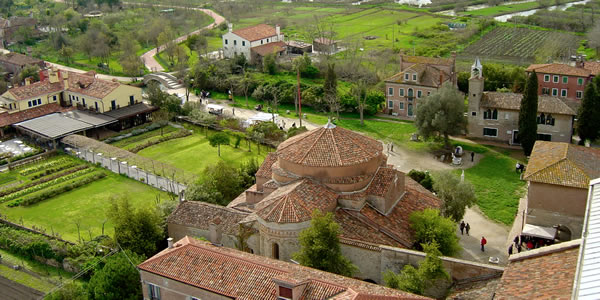
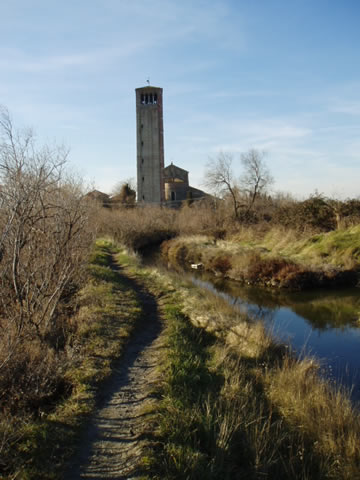
Grassy, semi-deserted Torcello is pretty much a one-trick pony: glittering Byzantine mosaics in a cathedral oddly stranded in the middle of a desolate, largely abandoned mud island. There's a reason for that.
Torcello was Venice 1.0, the first of the lagoon islands to be called home by a mainland population fleeing the Barbarian hordes that overran the Italian peninsula during the Dark Ages.
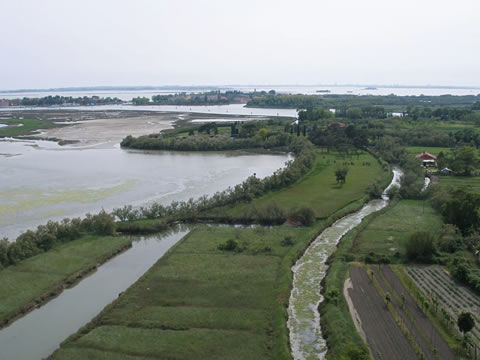
Torcello was a thriving center of some 20,000 souls from the 7th to 11th centuries. It was from here that settlers first started moving to the area around the Rialto Bridge to build what we now know as Venice.
Starting in the 11th and 12th centuries, however, malaria and competition from the upstart community of La Serenissima set in and quickly depopulated the isle.
Venice scavenged the ruins for building materials, so most of its buildings and palaces have now utterly vanished.
Torcello now runs on a skeleton crew of 75 inhabitants (though that's up from 20 just a few decades ago).
Today Torcello consists of little more than one long canal leading from the ferry landing past sad-sack vineyards to a clump of buildings around a sun-bleached dirt-and-gravel square at its center.
Along the way, you'll pass the storied Cipriani (one of Venice's finest restaurants in the oddest location for one; see below) and a side canal branching off to the right.
Notice the wooden pilings hammered into the edges of the muddy bank. Atop such pilings all the stone palazzi of Venice itself are built. The anaerobic atmospehre down in the mud keeps the wood from rotting—but does nothing to keep the weight of all that stone from pressing them slowly farther into the mud while, simultaneously, the levels of the Adriatic Sea rise imperceptibly, sinking the city of Venice ever so slowly into the lagoon.
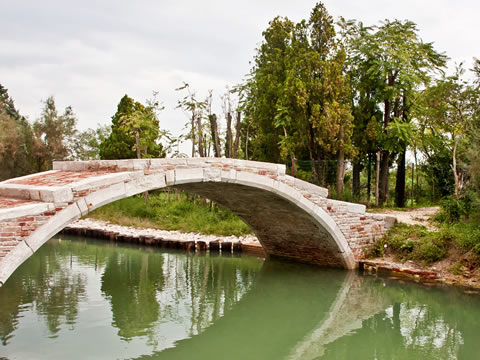
A bit farther along you'll pass a lithe, wafer-thin span of brick-and-stone without railings nicknamed "The Devil's Bridge." it was built in the 15th century (and restored in 2008), and its name—Ponte del Diavolo—is most likely merely a fun corruption of "Diavoli," the name of a local family.
The legend, though, is far more fun.
There are many legends in Europe of particularly odd-looking bridges having been built by the Devil—usually in the span of just one night, and usually in exchange for souls or some other macabre favor.
The legend of the Devils' Bridge on Torcello has a slightly different twist.
They say that, during the Austrian occupation of Venice (1797–1849) a local girl fell in love with a young Austrian officer, but her parents forbade them to see one another. When that didn't take, eventually they had the poor boy killed.
The distraught girl approached a witch to ask for her help, and the witch made a deal with the Devil on her behalf: Return the slain boy to life, and they would gather seven fresh new souls of children to replace his.
The devil held up his end of the bargain. He appeared as scheduled one night at the foot of the bridge with the boy. The with appeared at the other end with the girl. The lovers dashed across the bridge and met in the middle to embrace... then ran away together.
The Devil looked to the witch, who remained, and demanded his payment.
Now on the hook for seven souls, the witch asked for another week to procure them and the Devil agreed. Luckily for area youngsters attached to their souls, the witch died before that next appointment.
They say the Devil still comes to the foot of this bridge on moonless nights, waiting at the far side for his payment.
Waiting for an unclaimed soul to wander over the bridge and become his.
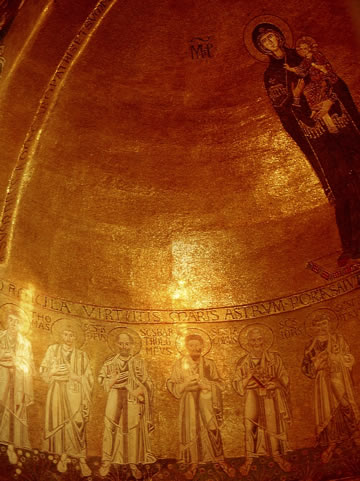
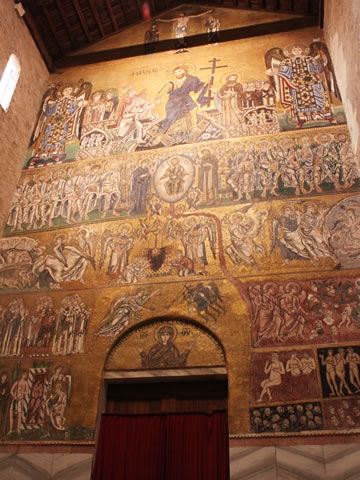
The cathedral is famous for its outstanding 11th- to 12th-century Byzantine mosaics—a Madonna and Child in the apse and a Last Judgment on the west wall—glowing walls of gold-flecked art to rival those of Ravenna and of St. Mark's Basilica itself.
(Technically, it's no longer a cathedral since there's no bishop on Torcello, but everyone still calls it that.)
The cathedral (tel. +39-041-730-119 or +39-041-296-0630) is open daily Mar-Oct 10:30am to 5:30pm; Nov-Feb 10am–5pm. (Adm).
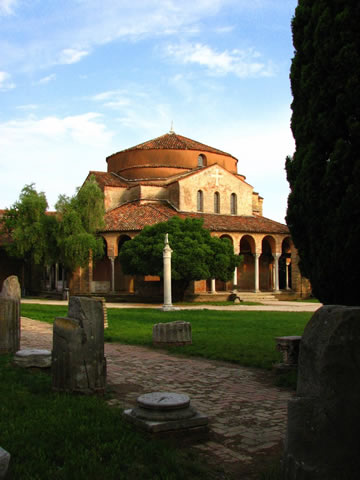
The octagonal columned portico and russet drum of its center look impressive, but the inside is nearly bare—though in a lovely way, with Byzantine capitals on the marble columns and a conical wooden ceiling.
Santa Fosca (tel. +39-041-730-084) is open daily 10am to 4:30pm. Admission is free.
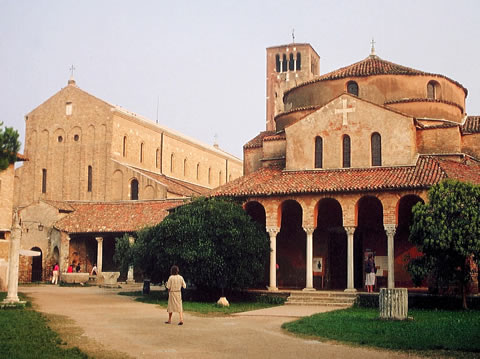
The tidy collection is split between archaeological fragments and the remains of some 10 other churches that once sprinkled Torcello's landscape. (Believe it or not, at its height Torcello supported 16 parishes.)
The Torcello museum open Tuesday to Sunday: Mar-Oct 10am–5:30pm; Nov-Feb 10am–5pm. (Adm).
Oh, and there's also a world-famous restaurant.
Somewhat incongruously, the island is also home to a world-famous restaurant (famous because Hemingway loved it) called Locanda Cipriani (www.locandacipriani.com). Yes, that Cipriani, of various "Ciprianis" around the world—not to mention Harry's Bar in downtown Venice (the original Cipriani's first name was Arrigo, which is Italian for "Harry.") Book ahead for a meal.
Torcello ★★
Vaporetto: 9 from Burano
» more
tel. +39-041-296-0630 or +39-041-730-119
Book a tour: Viator.com
Venetian Islands & Torcello tours
• Murano, Burano and Torcello Half-Day Sightseeing Tour
• Context: The Islands of the Lagoon: Byzantine and Early Medieval Venice (Murano & Torcello; Burano if you choose)
• Private Tour: Murano, Burano and Torcello Half-Day Tour
• Context: Science and Secrets of the Lagoon (note: unique tour in a skiff of all aspects of the lagoon, without shore visits except a potty break on Torcello)
Planning your day on the outlying islands: You can easily be done with this tiny island in an hour while you wait for the next ferry (half-hourly), but if you take time to tramp around à la Hemingway, you might stay for two (just don't get stuck when the last "9" ferry for the night heads back to Burano at 8:10pm).. Venice itineraries
Santa Fosca closes at 4:30pm; last entry to the museum and bell tower are at 5pm (4pm winter); and last entry to the basilica is 5:30pm (4:30pm winter), so do them in that order to fit them all in.
How to get to Torcello: Take the "9" ferry from Burano; getting to Burano, though, can get a bit complicated, and is explained in detail on a separate page. » more
Go ahead and get the €10 cumulative ticket for all three sights with entry fees (the cathedral at €4, campanile/bell tower at €4, and archeological museum at €3). Bonus: it comes with a free audioguide (which is otherwise €1).
Mass is still said at the basilica at 9:30am Sundays, 4:30pm weekdays.
Sights nearby
Burano (another island)
Murano (another island)
Where to eat
Locanda Cipriani
Trattoria da Romano (on Burano)
Hotels on Torcello
Locanda Cipriani (on Torcello)
Executive Suite Venezia (on Torcello)
Hotels nearby
RR Apartment Villa Santa Caterina (on Mazzorbetto)
Venissa (on Mazzorbetto)
Hotel Murano Palace (on Murano)
Rivalonga Apartment (on Murano)
Ca' San Donato (on Murano)
Hotel Al Soffiador (on Murano)
Hotel Conterie (on Murano)
LaGare Hotel Venezia-Murano (on Murano)
» More hotels on Murano
Share this page
Search ReidsItaly.com
Hotels on Torcello
Locanda Cipriani (on Torcello)
Executive Suite Venezia (on Torcello)
Hotels nearby
RR Apartment Villa Santa Caterina (on Mazzorbetto)
Venissa (on Mazzorbetto)
Hotel Murano Palace (on Murano)
Rivalonga Apartment (on Murano)
Ca' San Donato (on Murano)
Hotel Al Soffiador (on Murano)
Hotel Conterie (on Murano)
LaGare Hotel Venezia-Murano (on Murano)
» More hotels on Murano



This article was written by Reid Bramblett and was last updated in July 2013
.
All information was accurate at the time.
about | contact | faq
» THE REIDSITALY.COM DIFFERENCE «
åß
Copyright © 2008–2017 by Reid Bramblett. Author: Reid Bramblett


