- Places
- Plans
- Itineraries
- Experiences
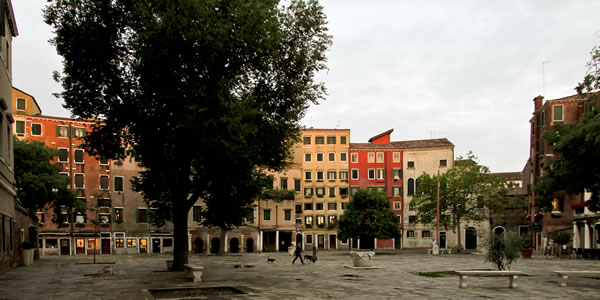
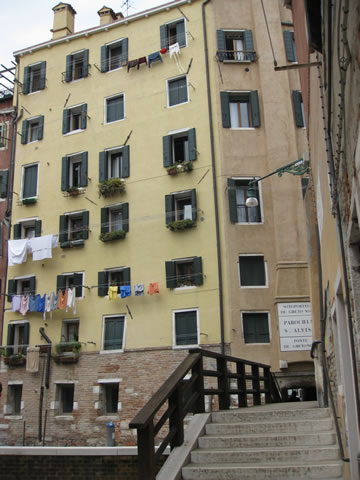
The Republic of Venice was no exception, but what was seen as remarkably open and welcoming to their eyes looks, to our modern sensibilities, to be outrageously prejudiced.
To summarize and oversimplify a complex story: Most of Europe wasn't particularly welcoming of Jews in the early 16th century. (You could argue the same about nearly every century, really, but I digress.)
After their expulsion from Spain following the culmination of the Reconquista in 1492, many Jews wandered Europe searching for new homes.
Great trading centers like Venice were a natural magnet, since most careers in the late medieval European economy were closed to Jews but there was one major one that was not.
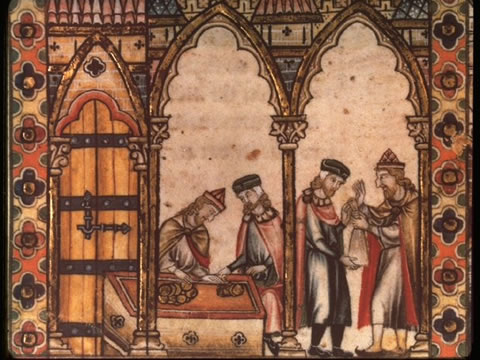
They could lend money.
The church called this usury (which was not merely bad; it was a cardinal sin).
The Jews called it banking.
Jews had done business in Venice since at least the 10th century, but for centuries the Republic went back and forth on whether it actually wanted to allow them to settle in the city.
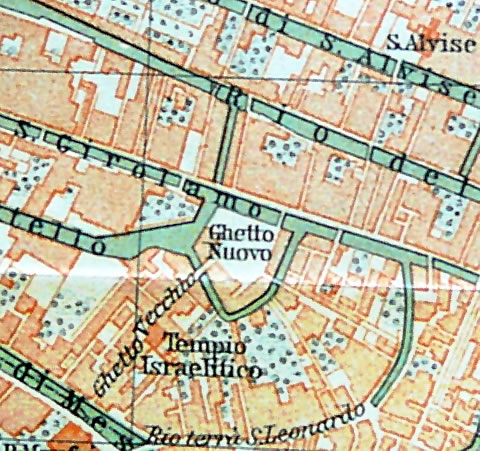
There were a few catches, however.
With few exceptions, the Jews could leave their neighborhood only by day and only for work, and—until Napoleon brought an end to the Republic in 1797—the Jews were forbidden to reside anywhere else in Venice. Jews also had to wear identification badges when they were out and about in the rest of Venice.
Since the city's foundry had previously long been located in that part of town, Venetians began referring to the Jewish neighborhood using the local dialect word for "foundry:" geto—which in the guttural pronunciation of the founding Ashkenazim population became ghetto.
Their movements were greatly restricted. There were only two bridges onto the island, and Christian guards closed them an hour after sunset in summer, two hours after in winter.
Until dawn, the only Jews allowed out of the Ghetto were doctors summoned for house calls and musicians hired out for parties.
The original core of Ashkenazim from Germany were later joined by Sephardim from Spain and Portugal. By 1541, a huge influx of Levantine Jews had the neighborhood bursting at the seams, so the city allowed the Jews to expand onto a neighboring island, confusingly named Ghetto Vecchio.
(Got that? The original island was Ghetto Nuovo, or "New Ghetto;" the second island was called Ghetto Vecchio, or "Old Ghetto," since that's where an even older foundry had been. Yes, confusing.)
In 1633, the neighborhood grew yet again to encompass the Ghetto Novissimo ("Really New Ghetto").
There was a short-lived second Republic of Venice in 1848–49 headed by local hero Danieli Manin, who had Jewish roots.As I said, the invasion of Napoleon brought Enlightenment ideals, full citizenship for Jews, and the abolishment of the Ghetto in 1797, but the Hapsburgs who swooped in after him demoted the Jews back to restricted status (though the full Ghetto lifestyle was not reinstated).
Venice's Jewish population didn't gain final freedom of the city until the unification movement that created the modern state of Italy swept through in 1866.
Even then, the Fascist era returned Jews one again to the status second-class citizens from 1938 until after World War II.
For more information on Jewish life and happenings in Venice, visit www.jvenice.org, moked.it/veneziaebraica, and www.ghetto.it.Relatively speaking, Italy's Jews fared the war better than those in Central and Northern Europe, but still: of the 204 Venetian Jews deported to Nazi death camps, only eight returned.
The post-war Jewish population of Venice dwindled rapidly. In 1945 there were around 1,500 Jews in Venice. Two decades later, there were only 844.
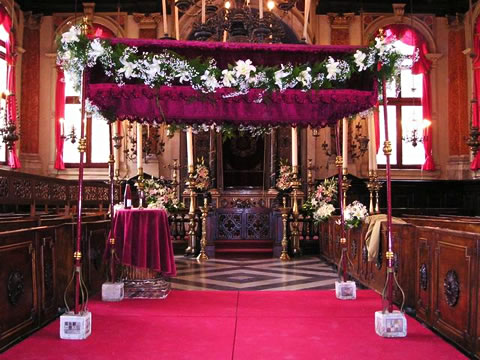
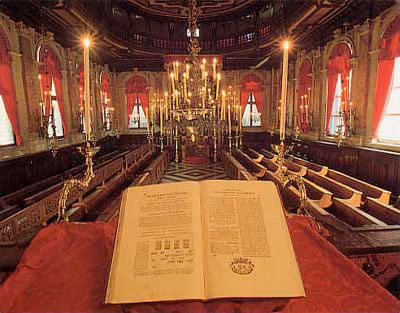
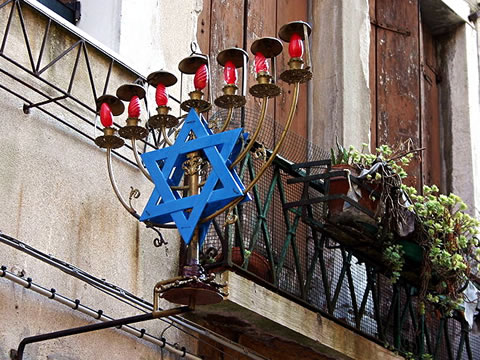
The ghetto remains, however, the focal point of Jewish life in Venice, with two operating synagogues, a Jewish library, day school, kosher food shops, a Jewish bakery, and—this being Venice, after all—a glass shop selling tiny glass rabbis and glass Hanukkah lamps.
There's also the small Museo Ebraico, or Jewish Museum (a.k.a. the Museo della Comunità Ebraica, or Museo of the Jewish Community), with a collection of 16th– to 19th-century artifacts (tel. +39-041-715-359
www.museoebraico.it). It is open Sun-Fri: June-Sept 10am–7pm, Oct-May 10am–5:30pm.
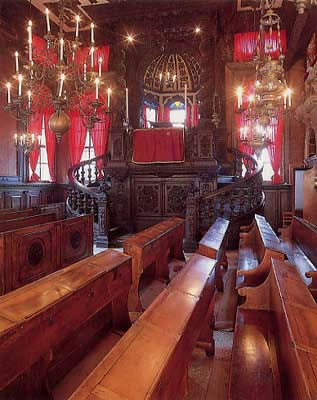
The museum offers excellent guided tours, in Italian and English, of the neighborhood and several of its synagogues, usually the following three: Scola Canton (Ashkenazi), Scola Levantina (Sephardic), and Scola Italiana (Italian)—though some tours (and special visits) also take you into the beautiful Scola Ponentina or Scola Spagnola (Spanish).
Tours depart hourly Sun-Fri from 10:30am to 5:30pm (Oct-May, the last tour is at 4:30pm); on Friday, the last tour of the day may be shortened or eliminated.


Tucked into a placid corner of the Cannaregio area, this walk explores the enduring legacy of the world's first Jewish ghetto. Context has designed this fascinating walk to reveal an aspect of the city most visitors never see—one refracted through the rich Jewish history of the lagoon city. We will begin the walk by stepping into the ghetto, the home of the Jewish Venetian community (so vividly depicted in Shakespeare's Merchant of Venice), founded in 1516; its quiet fascination and serenity entrances all. We will spend time visiting the Synagogue, which brings special insight to the ghetto and its religious practices, as well as two moving memorials to Italian Jews lost in World Wars I and II. ...


A melancholy calm permeates the Venetian Ghetto, which today is home to a mere 50 Jews. During the Renaissance, however, it was a beehive of activity with an intense cultural life and five Synagogues to serve the various nationalities of Jews who settled here. The oldest of these is the Scuola Tedesca of 1528 where German Jews followed the Ashkenazi rite, while the Scuola Levantina (1538) and Scuola Ponentina (1580) administered to Sephardic Jews from the Balkans and Spain. We will visit several of these Synagogues, as well as the Jewish Museum with its fascinating collection of antique ketubboth, or marriage contracts. A striking bronze monument to the Holocaust stands in the Ghetto's main square. ...
Jewish Ghetto & Museo Ebraico ★
Campo Gheto Novo 2902\b, Cannaregio
Vaporetto: S. Marcuola - Ghetto or Ponte delle Guglie - Ghetto
tel. +39-041-715-359
www.museoebraico.it
Open Jun-Sep: Sun-Fri, 10am–7pm
Open Oct-May: Sun-Fri, 10am–5:30pm
Info on Venice's Jewish community:
www.jvenice.org
www.ghetto.it
moked.it/veneziaebraica
Venice Jewish Ghetto & Synagogue tours
• Context: Shylock's Venice
• Jewish Venice & Cannaregio
Planning your day: To take a glance at the Venice Jewish Ghetto only takes 15 minutes—but if youre coming all the way up here, I imagine you'll want to stick around and take a tour or two.
The museum's synagogue tours leave hourly on the half hour from Sunday to Friday from 10:30am to 5:30pm (3:30pm Oct–May; tours may end an hour earlier on Fridays to avoid going past sundown), and make an excellent companion to the walking tour of Cannaregio and the Ghetto offered our partner Viator.
Recently, the museum has been sponsoring concerts of Jewish music Tuesdays at 5:30pm. Check to see if it's still going on when you visit.
If you book ahead by phone (tel. +39-041-715-359), the museum can also arrange visits to the Jewish cemetery on the Lido.
Sights nearby
★★★ Grand Canal (canal)
Giardini Savorgnan (park)
★★ Ca d'Oro (palace/museum)
Rialto Bridge (bridge)
Where to eat nearby
Brek [light meal]
★ Pizzeria Ae Oche [light meal]
Trattoria Cea [meal]
» Where to eat Kosher in Venice
Hotels nearby
Hotel Locanda del Ghetto [cheap]
RR Bernardi-Semenzato [cheap]
RR Ariel Silva [cheap]
» More hotels in Cannaregio from Booking.com
» Kosher lodgings in Venice
Share this page
Search ReidsItaly.com



This article was written by Reid Bramblett and was last updated in July 2013
.
All information was accurate at the time.
about | contact | faq
» THE REIDSITALY.COM DIFFERENCE «
åß
Copyright © 2008–2017 by Reid Bramblett. Author: Reid Bramblett


