- Places
- Plans
- Itineraries
- Experiences
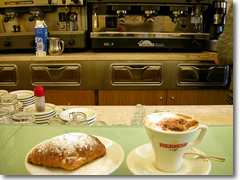
A typical Italian breakfast of cornetto (sweet croissant) and cappuccino at a corner bar (this one happens to be in Alberobello, Apulia).Breakfast is treated lightly—a cappuccino and cornetto (croissant) or brioche (roll brushed with sweetness) at the corner bar.
There are exceptions: many hotels, tired of hearing foreign guests grouse about the paltry morning offerings, have taken to serving sumptuous buffets like those offered in the United States and north of the Alps, complete with ham, cheese, and eggs.
At the big meal of the day (be it lunch or dinner) portions on a plate may be smaller than visitors are accustomed to, but a traditional meal gets you four full courses: antipasto, primo, secondo, and contorno.
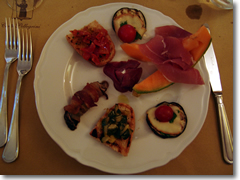
An antipasto misto (mixed appetizer plate).The antipasto (appetizer) is often a platter of salumi (cold cuts), bruschette, or crostini (both versions of toasted or grilled bread topped with pâté or cubed tomatoes) and/or vegetables prepared in oil or vinegar.
Perhaps the most delectable antipasto is proscitto e melone—thin slices of prosciutto ham draped across wedges of cantaloupe (oddly divine).
Sometimes you get all of the above, as in the picture to the right.
I, for one, could make an entire meal out of just antipasti and be happy. (Well, maybe I'd add dessert.)
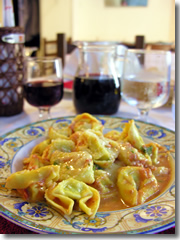
TortelliniNext is the primo (first course), which may be a zuppa (soup), polenta (a cornmeal mush), risotto (a rice dish), or pasta.
Aside from pizza, pasta is probably Italy’s best-known export. It comes in two basic forms: pastasciutta (dry pasta), the kind most of us buy at the grocery store, and pasta fresca (fresh pasta), the kind that most self-respecting establishments in Italy, even those of the most humble ilk, will probably serve.
Pastasciutta comes in long strands including spaghetti, linguine, trenette; and in tubular maccheroni (macaroni) forms such as penne (pointed pasta quills) or rigatoni (fluted tubes), to name only a few.
Pasta fresca is made in broad sheets, then cut into shapes—used in lasagna, cannelloni, and the stuffed pastas tortelloni and ravioli—or into long noodles ranging from wide papparedelle to narrow fettuccine.
If you sense that this isn’t even a dent in the world of pasta, you’re right: There are more than 600 pasta shapes in Italy.
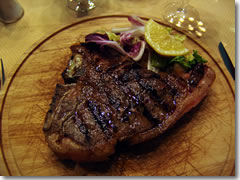
The secondo (entree) may include meat, fish, seafood, chicken, or game.
To accompany it you order a contorno (side dish) of verdure (vegetables) or an insalata (salad).
You almost always have to order a side dish separately. Rarely does one come on the same plate as your main course.
At the end of the meal, dig into a dolce (dessert)—fruit, gelato (ice cream), tiramisù (sweet cream atop espresso-soaked lady fingers), or formaggio (cheese) are traditionally offered.
Meals are usually accompanied by wine and a bottle of aqua minerale (mineral water)—either con gas (fizzy) or naturale (still).
At the end of the meal—sometimes before dessert, usually after—comes an espresso—which honestly won't keep you up; it actually seems to help settle the big meal in your stomach. (Oh: One sure way to alienate an Italian waiter is to order cappuccino after dinner—it’s usually drunk only in the morning.)
Espresso is often followed by grappa, a fiery digestivo liqueur made from what’s left over after the wine-making process.
Many guidebooks translate a limited list of local dishes and food names. Italian phrase books have more and the pocket-sized Marling Menu-Masters (Altarinda Books) are particularly good resources for both ingredients and dish names. Alternately, you can take your English-Italian dictionary and look up individual words on the menu.
Most waiters speak enough English to at least tell you what plant or animal stars in a dish. When it comes down to it (allergies aside), you needn't know the official name of the dish or full list of ingredients, just whether it's chicken, fish, pasta, or sheep's testicles.
If you're friendly and show great interest in the food, waiters (and especially owners) love to show off their kitchen's talents to visitors. The more outgoing and curious you are, the better chance they'll bring out unexpected tidbits for you to try, invite you into the kitchen to meet the chef or down into the moldy ancient wine cellar below, and even join you at the table for an after-dinner drink on the house.
Share this page
Search ReidsItaly.com



This article was written by Reid Bramblett and was last updated in April 2015.
All information was accurate at the time.
about | contact | faq
» THE REIDSITALY.COM DIFFERENCE «
åß
Copyright © 2008–2017 by Reid Bramblett. Author: Reid Bramblett


