Sights in Downtown Ancient Rome
What to see around the Forum and Colosseum in Rome
www.turismoroma.it
www.060608.it
City museums:
www.museiincomuneroma.it
Ancient sites:
archeoroma.beniculturali.it
ReidsItaly.com Rome Map
» View ENLARGED MAP with all listings
TOURS FROM TRUSTED PARTNERS

Ancient sites
Sights By Category
• Top Sights
• Museums
• Ancient sites / ruins
• Piazze & fountains
• Churches
• Reid's list
• Free sights
• Michelangelo's Rome
• Bernini's Rome
• Caravaggio's Rome 


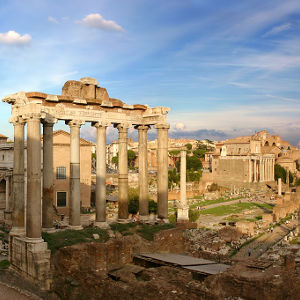
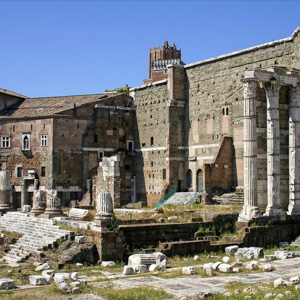
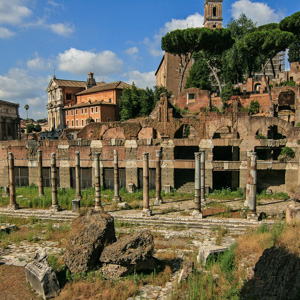
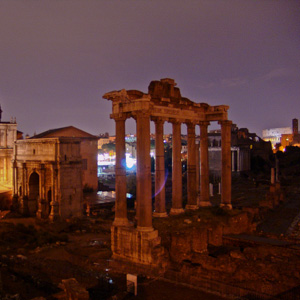
The Roman Forum - Lines of chipped columns, crumbling triumphal arches, broken temple porticoes, the curve of abandoned marketplaces, armless statues patinaed with age—you can wander at will through the ghost city of an ancient Rome that, 2,000 years ago, ruled over the entire known world.... ![]()

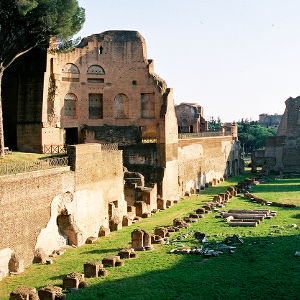
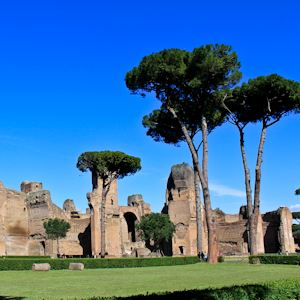
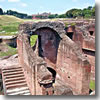
The Palatine Hill - The Palatine Hill was where the legendary Romulus founded a tiny Latin village in the 8th century BC. When the hamlet grew to become Rome, patrician families and early emperors covered it in their stately mansions (called palatium after the hill, which evolved into palazzo in Italian, palais in French, and "palace" in English). It offers a scenic escape from the crowds where you can wander across the grassy floors of ancient Imperial palaces and peer down the gated passageways that were once the homes of Rome's rich and famous...


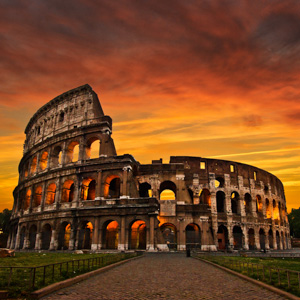
The Colosseum - The world's greatest sports arena, where 50,000 of the masses could be amused at a time, and the contests between men—and between man and beasts—could last 100 days or more and involve the slaughter of literally thousands of animals and gladiators. Yes, ancient Rome was a cheery place... ![]()

Imperial Fori - The grandeur of Imperial Rome, laid out in a series of public spaces, markets, and triumphal columns by successive emperors, you can admire with a quick stroll or bike ride down Via dei Fori Imperiali: The Forum of Trajan, the Forum of Augustus, the Forum of Nerva.... ![]()


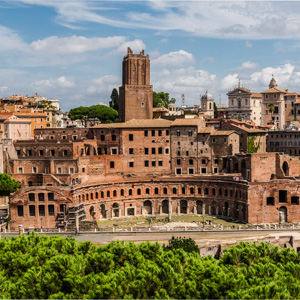
Trajan's Market - The world’s first multilevel shopping mall was built by the Emperor Trajan in the AD 2nd century. It's the only bit of the Imperial Fori consistently open to the public, offering a glimpse into real daily life in Ancient Rome. You can wander a brief but evocative section of the city's most intact ancient streets, the grand bazaar hall lined by former market stalls with marble porticos and barrel-vaulted ceilings, and the giant curving sweep of that four-story, 150-shop shopping center... ![]()


Gazing over the Forum at night from the Campidoglio - Walk up Michelangelo's sloping carriage staircase to the top of the Capitoline Hill, around the Palazzo Senatorio, to a hidden, magnificent panorama across the Roman Forum and Palatine Hill, with the Colosseum peeking out in the background... ![]()

Domus Aurea (Nero's Golden Palace) - [currently closed] After the Great Fire of AD 64, Nero seized more than 200 acres of the city's burned-out historic core to create one of the most sumptuous palaces in history, slathered in frescoes and stuccoes, with rotating banquet tables over which would drift showers of flower petals, and entire rooms laminated in gold leaf (hence the nickname). It was a party palace par excel lance for an emperor who would go down in history as one of the most hated leaders of all time... ![]()
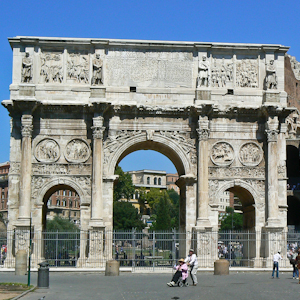
The Arch of Constantine - Standing between the Colosseum and the Roman Forum, the Arch of Constantine is one of the largest of Rome's ancient triumphal arches, celebrating Emperor Constantine the Great's AD 312 victory over Maxentius at the Milvian Bridge—which marked a seismic shift in European history, when Rome (and, eventually, Europe) started converting from pagan to Christian... ![]()
Teatro di Marcello - This early blueprint for the Colosseum survives even though medieval builders grafted a series of apartment buildings on top of it (don't tell me the Romans don't know how to recycle)....
The Foro Boario - The forgotten forum, a pair of teensy, utterly ancient temples slung between the back side of the Capitoline Hill and the Tiber River, across from the Mouth of Truth, in what was until modern time a cow pasture.... ![]()
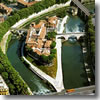
Tiber Island - Rome's only island rides the water of the Tevere like a boat laden with the echoes of ancient myths and beliefs... ![]()
Circus Maximus - Slung into the Murcia Valley between the Palatine and Aventine hills, the elongated grassy jogging oval known as the Circo Massimo was once the largest stadium in all of Rome, a 2,000-foot-long track where the empire threw its most extravagant chariot races to entertain crowds of up to 385,000 screaming spectators... ![]()
Museums & Monuments


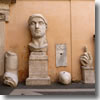
Capitoline Museums - Stuffed with ancient statues and mosaics and Renaissance and baroque masterpieces by Caravaggio, Rubens, Titian, Bernini, and Tintoretto, the twinned Capitoline Museums are home to such Rome icons as the archetype statue of the she-wolf suckling the twins Romulus and Remus, Lo Spinario (boy picking thorn out of foot), the Dying Gaul, and those gargantuan marble head, hands, and feet you see on all the postcards (usually with a cat posing on them).... ![]()

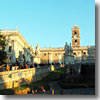
Campidoglio (Capitoline Hill) - Walk up Michelangelo's sloping carriage staircase, past the church of Santa Maria in Aracoeli, to the top of the Capitoline Hill (seat of the Roman government and whence we get the word "capitol"). Skirt around the bronze equestrian statue of Marcus Aurelius (a replica of the AD 2nd-century original), past the two palazzi housing the Capitoline Museums (fabulous ancient art, plus baroque paintings by the likes of Caravaggio, Titian, Rubens, and Il Guercino), and around to the back Palazzo Senatorio. Here you'll find a hidden, magnificent panorama across the Roman Forum and Palatine Hill, with the Colosseum peeking out in the background... ![]()
Museo Palatino - Atop the Palatine Hill, this is an excellent collection of Roman sculpture and finds from the ongoing digs in the surrounding Palatine palazzi.... ![]()
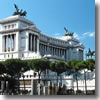
The Vittoriano - The Monument to Vittorio Emanuele II—dedicated to Italy's first king, Victor Emmanuel II, and usually called "The Wedding Cake" or "The Giant Typewriter"—is the undisputedly ugliest and most pretentious building in all of Rome. However, it now has one saving grace: you can now climb it for a magnificent panorama over the heart of ancient Rome.... ![]()
Churches


San Clemente - This early medieval church's mosaics, marbles, and Masolino frescoes would be worth a visit in of themselves. But the real show here is that you can head downstairs to see Rome's layer effect at work, exploring church stacked upon church stacked upon a pagan temple to Mithras surrounded by ancient Roman streets and houses deep underground... ![]()
Santa Maria in Aracoeli - The medieval Italian version of the Stairmaster: clambering up every last steep one of this church's 124 steps to see the miraculous baby Jesus statue inside... ![]()

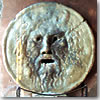
Santa Maria in Cosmedin - It's not the glittering mosaics, 12th-century bell tower, or cosmatesque pavement inside that draw the crowds to this medieval church; it's the ancient Roman sewer-covering inside the portico, a grotesque face with a gaping mouth called the
"Mouth of Truth," into which Gregory Peck-wannabes trust their hands and brazenly tell lies while Audrey Hepburn types shriek with horror as the men pretend that the mouth chomps off their hands for fibbing. Rent Roman Holiday and you'll see what I mean... ![]()

The Mouth of Truth - An ancient Roman sewer-covering carved into a grotesque face with a gaping mouth that legend holds will bite off the fingers of anyone who dares stick in his hand and tell a lie.... ![]()
Sights nearby
Circus Maximus - Slung into the Murcia Valley between the Palatine and Aventine hills, the elongated grassy jogging oval known as the Circo Massimo was once the largest stadium in all of Rome, a 2,000-foot-long track where the empire threw its most extravagant chariot races to entertain crowds of up to 385,000 screaming spectators... ![]()
San Pietro in Vincoli - The rusty chains under the altar are supposedly those that imprisoned St. Peter, but what everyone really comes here to see is Michelangelo's Moses... ![]()

Santa Maria Maggiore - One of Rome's four great ancient basilicas was built in the 5th century and sports fantastic, glittering mosaics... ![]()
Santa Sabina - This gorgeous, rarely visited church on the Aventine Hill retains some of the earliest depictions of Christianity's major artistic themes in the world on its carved 5th-century doors... ![]()
San Giovanni in Laterano - Rome's cathedral—no, it isn't St. Peter's—is one of the great basilican churches of Rome, with a Giotto fresco and some lovely quiet cloisters... ![]()
Scala Santa - Across the street from Rome's cathedral (San Giovanni in Laterano), is an unassuming, small, chapel-like structure housing the Scala Santa, the "Holy Staircase"of 28 steps of Tyrian marble that legend holds were the actual staircase of Pilate's house, which Jesus descended after being condemned, brought back to Rome by St. Helena... ![]()
Related pages
- Bordering neighborhoods: Lower Tiber Bend, Upper Tiber Bend, Tridente, Esquiline/Viminal/Quirinal, Aventine/Testaccio, Trastevere, Outskirts
- Hotels near the Forum and Downtown Ancient Rome
- Rome city layout
- All the ancient sights, ruins, and museums in Rome
- Top sights in Rome
- Sightseeing homepage
- Rome homepage
This material was last updated February 2011. All information was accurate at the time.
about | contact | faq
» THE REIDSITALY.COM DIFFERENCE «
Copyright © 2008–2011 by Reid Bramblett. All rights reserved.


ShareThis



