- Places
- Plans
- Itineraries
- Experiences
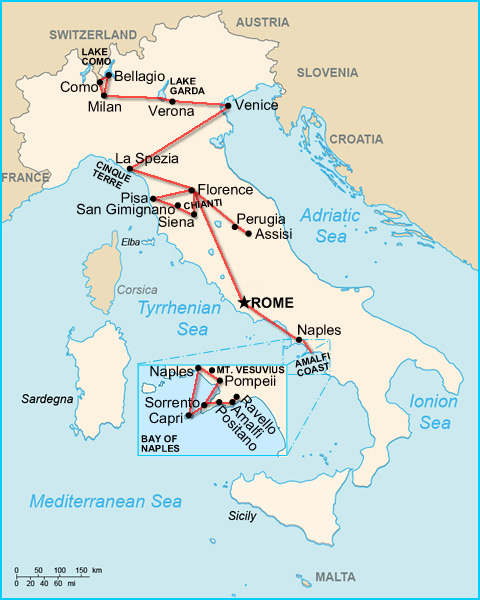 Here is an itinerary that takes in the great cities—Rome, Florence, Venice, and Milan.
You also get to see some of the icons of Italy: the ancient Roman ghost city of Pompeii, the Leaning Tower of Pisa, the medieval hilltown city of Siena, and the fishing villages of the Cinque Terre at the tip of the Italian Riviera.
The real treat comes at the end: a couple of days spent exploring the Italian Lake district of Northern Italy, with resort towns strung along the shores of Lake Garda and Lake Como backed by the cut-glass peaks of the Dolomites and the Alps.
Where to spend each night
Hotels in Rome (days 1-5)
Hotels in Florence (days 6–9)
Hotels in Cinque Terre (day 10)
Hotels in Venice (days 11–12)
Hotels in Verona or Sirmione (days 13)
Hotels in Milan (day 14 or 14–15)
Hotels in Como or Milan (day 15)
Here's the basic itinerary. It's pretty packed—a lot of early morning wake-ups, a lot of churches and museums—because there's simply so much to see and do in Italy.
By all means, feel free to prune this itinerary down to something a bit slower paced. Think of this more as a blueprint to squeezing in the maximum possible. You should, above all, have fun.
Don't forget to pay attention to the "Before you Leave" section at the end of the itinerary covering all the details you need to take care of before leaving home—and be sure to read the "Foolish Assumptions" page about how these itineraries are meant to work. Have fun!
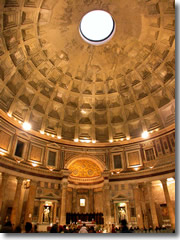
The Pantheon in Rome.Take a tour
If you prefer an expert guide for your sightseeing, here are some walking tours from our partners at Viator.com that cover many of the sights featured on this day:
• Best of Rome Afternoon Walking Tour
• Baroque Rome Small Group Day Tour
• Rome Photography Walking Tour: Learn How to Take Professional Photos
• Classical Rome Morning Tour
• Rome Angels and Demons Half-Day Tour
• Private Tour: Classical Rome Art History Walking Tour
• Ancient Rome Half-Day Walking Tour
• Rome Hop-on Hop-off Double Decker Bus Tour (no site entries)
MORNING: Most transatlantic flights land in Rome in the early morning (around 8am), and by the time you collect your bags, go through customs/immigration, get downtown, and check into your hotel, it'll by 11am—plenty of time to check in, splash your face, and head out for an afternoon of sightseeing.
Just don't give in to the urge to lie down and take a cat-nap. Trust me. Those first-day "catnaps "have a nasty habit of lasting until 7pm, at which point it takes supreme willpower to drag yourself out of bed to find dinner. Best just to stay moving and stay awake.
Now I know the first day can be rough, what with jet lag and the fact that you probably didn't sleep well on the plane, so today, though it seems packed with activity, is really not all that taxing. It's mostly just poking around the greatest churches of the Tiber Bend, the center of the old city (plus one small museum). Plan to spend only about 10–15 minutes inside each church—give yourself permission just to look at the highlights and not to try and appreciate every altarpiece and architectural element—and you will keep on schedule and not feel too overwhelmed.
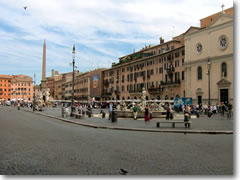
Piazza Navona.AFTERNOON: Sitting down to a leisurely lunch will only exacerbate the jet lag, so just grab a quick bite en route to Rome's prettiest square, the gracious, fountain-studded, cafe-lined Piazza Navona.
Pop out of the north end of the piazza to see the church of Sant'Agostino (works by Caravaggio and Raphael inside), then head south past San Luigi dei Francesi (more great Caravaggios) to the courtyard hiding the curly-cue dome atop Sant'Ivo alla Sapienza. Walk through the courtyard, past the church, and out the east side of the building to Piazza Sant'Eustachio, home to the most famous cappuccino in Rome at the Caffé Sant'Eustachio. Don’t linger too long, or the jet lag will start to catch up with you (an extra cappuccino or two helps).
Just a bit farther east is the noble Pantheon, the only ancient Roman temple to survive the millennia virtually intact and one of the best sights in all of Rome (if you skip everything else on this day, at least see the Pantheon).
The area around the Pantheon is the best spot in Rome for ice cream fans, so don't forget to try some gelato (Italian ice cream) in between the sights (gotta keep your strength up, after all).
Just south of the Pantheon, on the piazza with the Bernini statue of an elephant carrying a tiny obelisk on its back, rises Santa Maria Sopra Minerva, a gothic church with Michelangelo's Risen Christ statue and Filippo Lippi frescoes inside.
Head north, past the baroque optical illusions in the church of Sant'Ignazio and the ancient Roman Column of Marcus Aurelius, then turn east across the Corso to find the iconic Trevi Fountain, into which it's tradition to toss a few coins and will ensure that, one day, you'll return to the Eternal City.
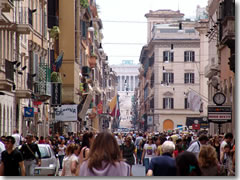
The evening passeggiata along Via del Corso.
Head north again from the Trevi Fountain, perhaps pausing for another gelato at nearby San Crispino—after all, how will you know whcih is best if you don't try them all? You're aimig for the lovely and lively Spanish Steps. Mingle for a while, then window shop down fashionable Via dei Condotti and the surrounding streets.
By now, the evening passeggiata see-and-be-seen stroll will be in full swing, so you can strut your stuff with the Romans along main drag Via del Corso and Via del Babuino—both of which lead north to converge at Piazza del Popolo, home to the fabulous church of Santa Maria del Popolo at the far end of the square. If you manage to make it here before the church closes at 7pm, so much the better, as inside are works by Raphael, Caravaggio, and Bernini.
Passeggiata your way back south to find a hearty and well-deserved dinner somewhere in the Old City.
(I know you're exhausted, but Italians eat late, so try to hold out until at least 6:30 or 7pm before heading to a restaurant).
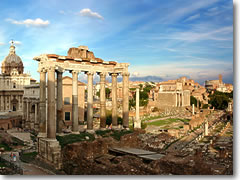
The Roman Forum in Rome.Take a tour
If you prefer an expert guide for your sightseeing, here are some walking tours from our partners at Viator.com that cover many of the sights featured on this day:
• Skip the Line: Ancient Rome and Colosseum Half-Day Walking Tour
• Private Tour: Ancient Rome and Colosseum Art History Walking Tour
• Ancient Rome Half-Day Walking Tour
• Imperial Rome Afternoon Tour
• Private Tour: Imperial Rome Art History Walking Tour
• Private Tour: Ancient Roman Art History Walking Tour
• Capitoline Museums and Origins of Rome Walking TourMORNING: Rome's all about Caesars, right? Start off day two in Rome by crawling around the ruins of the Roman Forum, where, two millennia ago, great orators held forth, senators debated, and Julius Caesar strode the streets.
Unfortunately, little is left to see in this dusty jumble of foundations, arches, and standing columns—and much left to the imagination. But so much the better, as this way you can be out by 11:30 and on your way to see Michelangelo's Moses in the church of San Pietro in Vincoli before it closes at 12:30pm.
AFTERNOON: After lunch (the old-school wine bar Cavour 313 is conveniently located nearby), pay a visit to the Colosseum. You just kind of look at it, take a peek inside at the floor plan, and you're done (save time in the often long lines by booking your entry ahead).
Now walk several long blocks farther south to tour the church of San Clemente, with medieval mosaics glittering in the apse, Renaissance frescoes in the chapels, and a door off the gift shop leading down to the first of several basements that provide an unparalleled tour through Rome's layer cake of history: below the current, medieval church is a 4th century church, and below that is a pagan temple to Mithras and the remains of several ancient Roman buildings, streets, and the splashing waters of a still-functioning aqueduct (go ahead and fill your water bottle; the water is clean, cold, and delicious).
Catch a bus to head back north to Piazza Venezia, at the north end of the Forum. Nearby is the elevated square Piazza del Campidoglio, where the Capitoline Museums will entertain you with ancient sculpture and Renaissance and baroque painting until 7pm.
Make sure that before sunset you nip around the back of the right side of the central building on Piazza del Campidoglio where you're treated to a surprise panorama of the Forum from above, with the Palatine Hill and the Colosseum as a backdrop. Have dinner in the Old City tonight.
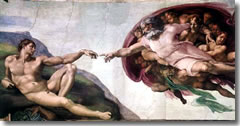
The Sistine Chapel ceiling in Rome.Take a tour
If you prefer an expert guide for your sightseeing, here are some walking tours from our partners at Viator.com that cover many of the sights featured on this day:
• Skip the Line: Vatican in One Day
• Private Tour: Vatican Museums and St Peter's Art History Walking Tour
• Skip the Line: Vatican Museums, Sistine Chapel and St Peter's Basilica Half-Day Walking Tour
• Skip the Line: Vatican Museums Walking Tour including Sistine Chapel, Raphael's Rooms and St Peter's
• Skip the Line: Vatican Museums Tickets
• Private Viewing of the Sistine Chapel and Vatican Museums
• Private Tour: Vatican Museums Walking Tour
• Skip the Line: Vatican Museums and Sistine Chapel Tour
• Rome Angels and Demons Half-Day Tour
MORNING: Today we spend on the other side of the river from the bulk of old Rome. Be up bright and early (I know, you never seem to get to sleep in) so that you beat the legions of tour buses to the Vatican Museums. , which open at 9am.
Spend all morning in there, drinking in such artistic wonders as Raphael's Transfiguration, Caravaggio's Deposition, the Raphael Rooms, and Michelangelo's incomparable Sistine Chapel ceiling.
tip
Early risers who want to cram more in can visit St. Peter's first—it opens at 7am—spend 90 min. there, then walk around the Vatican walls to tour the Vatican Museums when they open at 9am. This'll free up more time later for Castel Sant'Angelo and some sights in Trastevere.AFTERNOON: They shoo you out in early afternoon, so grab a snack on your way around the Vatican walls to visit the grandiose church of St. Peter's. See Michelangelo's Pietà and tour the tombs of popes under the basilica before climbing its dome for a panoramic sweep of the city across the river.
If you finish with St. Peter's quickly, you may want to head to the pope's nearby Renaissance fortress, the Castle Sant'Angelo on the river, which has a nifty museum of arms and armor. (If, however, you left for this trip on Friday, today would be a Monday and the castello is closed—which is why you visited the Vatican today; its one of the few museums open Mondays in Rome.)
Either way, spend the evening in the medieval neighborhood of Trastevere, where you can find lots of excellent Roman restaurants.
Take a tour
If you prefer an expert guide for your sightseeing, here are some walking tours from our partners at Viator.com that cover either of the sights featured on this day. Note that ther are two tiems for the the Borghese Gallery tour: 9am or 3pm. The Trastevere tour starts at 6pm in summer (3pm Nov-Mar):
• Skip the Line: Borghese Gallery and Gardens Walking Tour
• Private Tour: Borghese Gallery and Baroque Rome Art History Walking Tour
• Skip the Line: Borghese Gallery Tickets (no tour; just the tickets)
• Trastevere and Rome's Jewish Ghetto Half-Day Walking Tour
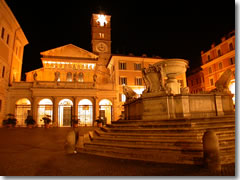
Santa Maria in Trastevere in Rome.
MORNING: Grab the 116 minibus to the Porta Pinciana (you'll see a park across the street; it's called the Villa Borghese). Enter the park and take the first path on your right (Viale di Museo Borghese) to get to the Galleria Borghese by your scheduled entry time
(TIP: you will need to purchase tickets in advance for this; see the "Before You Leave" sidebar at the end of this itinerary). Tour its collections of amazing early Bernini sculptures and Raphael and Caravaggio paintings until they kick you out. Wander through the Villa Borghese park for a while until it's time to rustle up some lunch.
Santa Maria in Trastevere in Rome.AFTERNOON: Take an afternoon off to do whatever the heck you feel like. You've earned it, and you're probably getting tuckered out. Personally, I'd spend it back in the medieval artisans district across the Tiber known as Trastevere, visiting its little churches, hanging out in a café, and soaking up the roman lifestyle until it was time for dinner—again, Trastevere is positively packed with restaurants, from the traditional to the trendy, so there's no way you exhausted all the possibilities last night.
After dinner, take a nighttime stroll through Rome to say goodbye. My favorite destiantions include climbing the Gianicolo hill north of Trastevere (Rome's Lovers' Lane with great views of the cty), and crossing the Tiber back to peek at the Roman Forum lit up at night from behind the Campidoglio—and, of course, one last visit to the Trevi Foundtain to toss in a coin and ensure my return to Rome one day. (Yes, it's cheesy; yes, I do it anwyay.)
Take a tour
If you prefer an expert guide and no-hassle transportation (and not have to bother switching hotels but rather continue to be based out of Rome), here are some Pompeii and Amalfi Coast day trip tours from Rome from our partners at Viator.com that cover many of the sights featured on this day:
• Pompeii Day Trip from Rome
• Pompeii and Amalfi Coast Small Group Day Trip from Rome
• Rome to Pompeii Shuttle Bus & Independent Day Trip
• Pompeii and Vesuvius Day Trip from Rome
• Naples and Pompeii Day Trip from Rome
• Pompeii and Amalfi Coast Small Group Day Trip from Rome
• Sorrento and Pompeii Small-Group Tour from Rome 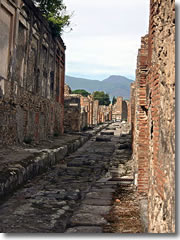
A street at Pompeii.ALL DAY:Don’t check out of your hotel (you'll be returning to spend one final night). Just leave everything but a daypack filled with your guidebooks, a hat, sunscreen, and lots of water. It's time to head to Naples and the ancient Roman ghost city of Pompeii for the day.
While it's possible to do it on your own in a single day, the train connections are confusing and time-consuming, so this is one trip where it pays either to take a direct shuttle, or best left to a group bus tour through Viator (www.viator.com) or some outfit like Enjoy Rome (www.enjoyrome.com).
A huge benefit to these tours is that they will also take you to the Naples Archaeological Museum (which houses most of the best statues and mosaics from Pompeii), and in some cases will even give you a quick visit to the Amalfi Coast if you sign up for one of the ever-popular Pompeii-Amalfi Coast tours—which woudl be nearly impossible to do on your own using public transportation in just one day.
No matter which tour, it will take all day, likely include lunch, and probably also a stop to see some of the sights of Naples on your way south, past Mt. Vesuvius, to the ancient Roman ghost town of Pompeii.
Don’t expect to be back in Rome until 8 or 9pm.
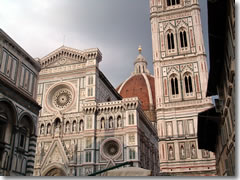
The Duomo in Florence.Take a tour
If you prefer an expert guide for your sightseeing, here are some walking tours from our partners at Viator.com that cover many of the sights featured on this day (as a bonus, many include the Accademia, which would free up tomorrow morning):
All sights:
• Florence Half-Day or Full-Day Sightseeing Tour
• Private Tour: Florence Sightseeing Tour
Duomo:
• Skip The Line: Best of Florence Walking Tour including Accademia Gallery and Duomo
• Skip the Line: Florence Renaissance Walking Tour with Accademia Gallery
• Private Tour: Florence Walking Tour
• Florence Walking Tour
Uffizi:
• Skip the Line: Florence Uffizi Gallery Tickets
• Skip the Line: Florence Uffizi Gallery Tour
• Skip the Line: Uffizi Gallery and Vasari Corridor Walking Tour
• Skip the Line: Small Group Florence Uffizi Gallery Walking Tour
• Skip the Line: Florence Accademia and Uffizi Gallery Tour
MORNING: Grab an early train to Florence and drop your bags by the hotel.
Head directly to the Duomo(cathedral) to climb Brunelleschi's ingenious and noble dome for a panorama across the city, then duck into the adjacent baptistery to marvel at the mosaics inside and the massive bronze doors outside—the ones facing the Duomo are so beautiful they became known as the Gates of Paradise.
AFTERNOON: Be sure you extricate yourself from the cathedral group by 1pm so that you can wander a few blocks south for a lunch on-the-go at I Fratellini, a traditional fiaschetteria, a hole-in-the-wall joint with no seats, just a counter selling wine by the glass and scrumptious sandwiches to patrons who stand in a crowd on the flagstones of the sidewalk and pedestrianized street.
Then continue a few more blocks to the stage set of Piazza della Signoria, filled with statues and lined by buildings the Medici would still recognize.
Opening off the south side of the square is world's premier gallery of the Renaissance, the Uffizi (TIP: another museums for which you'll want to purchase tickets before leaving home). Spend the rest of the afternoon communing with Giotto, Botticelli, da Vinci, Michelangelo, Raphael, Caravaggio, and Titian until they boot you out the doors at 7:30pm. Have a Tuscan feast at Il Latini before bed.
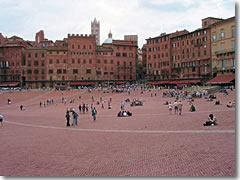
Piazza del Campo in Siena. (Photo by Zyance)Take the tour!
The only way to fit it all in on an all-day escorted tour with partners at Viator.com:
• Tuscany in One Day Sightseeing Tour (12 hrs)
There are other day trip options if you want to take things more slowly and do just a few of the towns:
Siena/San Gimignano:
• Siena and San Gimignano Small Group Day Trip from Florence (8 hrs)
• Private Tour: Siena and San Gimignano (8.5 hrs)
• Siena and San Gimignano (8.5 hrs)
Pisa:
• Private Tour: Pisa and the Leaning Tower from Florence (4 hrs)
• Pisa and the Leaning Tower Half-Day Trip from Florence (5.5 hrs)
• Private Tour: Lucca and Pisa from Florence (10 hrs)
The Chianti
• Small Group Chianti Wine Region Day Trip from Florence (8 hrs)
• Chianti Region Wine Tasting Half-Day Trip from Florence (5 hrs)
• Private Tour: Chianti Wine Tasting (5–9 hrs)
• Chianti Region Wine-Tasting and Dinner Half-Day Trip (8 hrs)
• Horse Riding in Chianti Day Trip (6 hrs)
• Vespa Day Trip to the Chianti (6 hrs)
• Tuscany Bike Tour in the Chianti (7 hrs)
• 5-Day Best of Italy Trip (5 days/4 nights)
ALL DAY: OK, you could conceivably fit in two or three of those towns listed above on your own using public transportation—maybe four if you rent a car and do everything at a dead run.
But honestly, the only reasonable way to cram this much Tuscany into one day is to let someone else do the driving—and the parking, and the guiding, and the entry tickets, and the taking care of finding everything and knowing all the background information...
That's why I highly recommend the Tuscany in One Day Sightseeing Tour offered by our partners at Viator.com. It is a long one—12 hours, getting up at 8:30am and not returning to Florence until 8:30pm—but you get a lot for your $108.
Cruise past the walled hilltown of Monteriggioni en route to the king of the Tuscan hilltowns, Siena, which you can tour with the guide or on your own. (If you opt for the latter, try to squeeze in both the wondrously frescoed rooms of the Palazzo Pubblico town hall on the main square, the gorgeous sloping scallop-shell of Il Campo, and a quick spin around the zebra-striped 12th century Duomo, with its medieval carved pulpit and a library frescoed in bright, Fujifilm colors by Umbrian master Pinturicchio—helped by a young apprentice named Raphael).
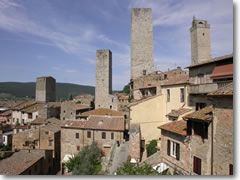
The towers of San Gimignano.After a drive through the Chianti—and lunch and a wine-tasting class at a Chianti vineyard—you check out the Medieval Manhattan of San Gimignano, a picture-postcard hilltown bristling with stone towers.
Last stop: Pisa, with its gorgeous gaggle of Gothic buildings on the Campo dei Miracoli (The "Field of Miracles"), and a chance to climb the famous Leaning Tower of Pisa.
The tour drops you back off in Florence around 8:30pm—exhausted, but with loads of famous Tuscan sights added to your list of vacation accomplishments. Time for a celebratory dinner—and early bed time.

Michelangelo's David in the AccademiaTake a tour
If you prefer an expert guide for your sightseeing, here are some walking tours from our partners at Viator.com that cover many of the sights featured on this day:
• Skip the Line: Accademia Gallery Tickets
• Skip the Line: Accademia Gallery Tour
• Skip the Line: Accademia and Uffizi Tour
• Skip The Line: Best of Florence Walking Tour, incl Accademia Gallery and Duomo
• Skip the Line: Florence Renaissance Walking Tour with Accademia Gallery
• Florence Half-Day or Full-Day Sightseeing Tour
• Private Tour: Florence Sightseeing Tour
MORNING: Florence rule #1: Be in line at the Accademia when it opens to see Michelangelo's David before the crowds arrive. (Avoid the hour-long wait altogether by reserving your tickets.)
Don't linger since before lunch you need to swing by Santa Maria Novella church for a look at the first Renaissance painting to use perfect perspective and a Ghirlandaio fresco cycle on which a young apprentice named Michelangelo helped out.
AFTERNOON: After a quick lunch, and while the city is shut down for the mid-day riposo, make your way over to the Giotto frescoes in Santa Croce church (it stays open all day), Florence's version of Westminster Abbey and the final resting place of Michelangelo, Galileo, Rossini, and Machiavelli with an excellent leather school in the back.
On your way back over to the heart of town, stop by Vivoli for the best gelato (ice cream) the world has ever known. Licking your cone, head back toward the center of town to cross the jewelry shop–lined medieval bridge Ponte Vecchio over to the artisans' quarter known as the Oltrarno.
Here you'll find the Medici's grand Pitti Palace, whose painting galleries will keep you occupied until closing time at 7pm. The Oltrarno is full of good, homey restaurants where you can kick back, toast your 48 hours in Florence, and avow a return.
ALL DAY: It's time to explore the two greatest hilltowns of Umbria, and the easiest way to do that is on yet another guided tour—this time a private tour of Perugia and Assisi. (It's not that I'm pushing guided tours here, it's that they are honestly the most convenient and, believe it or not, cheapest way to go. For up to two people, this will actually work out cheaper than renting a car and doing it on your own; for three people, you're about breaking even—and you still get a professional guide and driver to do all the work.)
The tour takes you first to the capital of Umbria, Perugia, which is really just a hilltown in city clothing, with some fantastic frescoes and carvings in its fountains, town hall, and churches. (Also the home town of Perugina chocolates; yum.)
You then head south to the famed pilgrimage hilltown of Assisi, where hometown hero St. Francis began his monastic career and the massive, two-story basilica erected in the saint's honor was covered inside, floor to ceiling and in all the chapels and nooks, with masterful frescoes by the Titans of pre-Renaissance Gothic painting—Giotto, Cimabue, Simone Martini, and the Lorenzetti brothers.
Eleven hours later, you are dropped back at your Florence hotel, ready for dinner.
Take a tour
If you prefer an expert guide for your sightseeing and want to stay based in Florence—which would make the transfer tomorrow to Venice far easier—you can take a day tour to the Cinque Terre with our partners at Viator.com; one is for hikers, the other for those who just wish to see a few of the villages:
• Cinque Terre Hiking Day Trip from Florence (13 hr.)
• Cinque Terre Small Group Day Trip from Florence (9.5 hr.)
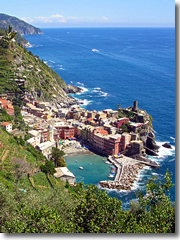
Vernazza in the Cinque Terre.ALL DAY: If you're going to do this in a single day by public transport (as opposed to taking a roundtrip tour from Florence; see box to the right), it is imperative that you get the 7:27am train from Florence to Riomaggiore (via train changes at Pisa and La Spezia). This will get you into the southernmost of the Cinque Terre villages at 10:08am: plenty of time to check into your accommodations and start hiking. If you miss that train, the earliest you can get into the Cinque Terre is 1:02pm—and you've wasted the bulk of the day.
Set out as soon as you can to hike the coastal trail that links all five of the colorful fishing villages that make up the Cinque Terre, inaccessible by car (though linked by a regional rail line that spends most of its time tunneling from town to town through the sea cliffs) and as yet only moderately touched by tourism (except June through August, when its packed with Rick Steves' fans—Damn you, Rick!).
The trails from town to town get progressively steeper and more challenging as you move north—from and easy 45-minute Via del Amore stroll between Riomaggiore and Manarola, to the largely level path above a beach Manarola and Corniglia (the only cliff top village of the five), to a scenic mix of moderate-to-tough trails and one long staircase between Corniglia and Vernazza (the postcard village of the bunch, picturesquely curved around a cove), and finally the tough, two-hour steep ascent and descent between Vernazza and Monterosso, the northernmost of the Cinque Terre. Or, you know, vice versa. You can hike it either way.
My vote: Take the train all the way to Monterosso and start the morning with the two workout stretches. Besides, coming in this direction, the first view of Vernazza as you come around the cliff is unforgettable (and if you do forget, it's plastered on postcards everywhere). Also, this way lets the going get easier as the day winds down, allowing you to finish with a sunset stroll back into Riomaggiore.
The Grand Canal in Venice.Take a tour
Though no tours of the Accademia are offered, you can get book a gondola ride with our partners at Viator.com:
• Venice Gondola Ride and Serenade
• Venice Gondola Ride and Serenade with Dinner
• Venice Walking Tour and Gondola Ride
MORNING: There's really no way around this: to get from the Cinque Terre to Venice requires some tiresome train changes and long journeys. The best option leaves Riomaggiore at 7:27am and arrives in Venice at 1:17pm (with changes at La Spezia and Bologna.
(Another option for die-hards who don't want to waste a second of sightseeing is taking off the night before on the overnight train that leaves Riomaggiore at 8:52 and arrives in Venice at the yawningly early hour of 5:26am the next day, though note that the train changes—11:08pm at Parma, 12:54am at Bologna—aren't terribly convenient for sleeping.)
If, however, you've done the Cinque Terre as a guided day trip and are leaving from Florence, there's an hourly bullet train called the Frecciargento that makes the trip in a cool 2 hrs. 3 min.—leave Florence at 8:30am, you're in Venice at 10:33am; sleep in and leave on the 9:30am and you're still in Venice by 11:33am, with loads for time to check into your hotel and get a proper lunch.
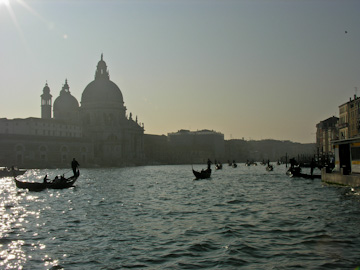
OK: assume you're arriving from the Cinque Terre directly. At least those six hours on the train will give you plenty of time to rest up, grab lunch from the cart or restaurant car, and prepare, once you arrive in Venice, to dive into the city of canals (not literally). Luckily, the vaporetto (ferry—kinda the public bus system of Venice) from the train station to all sights in the historic center cruises right down the famous Grand Canal.
AFTERNOON: Check into your hotel as quickly as possible then spend the balance of the afternoon perusing the Renaissance masterpieces in Venice's Accademia Gallery(yes, it has same name as a museum in Florence; this is because both are part of their city's "Academy" of Fine Arts).
If you have time (and for a chance of pace), also try to fit in an hour or so admiring the modern art—yes! Italy has modern art, too!—at the lovely Peggy Guggenheim museum nearby.
Take a gondola ridebefore dinner (yeah, it's a bit cheesy—and expensive—but you wouldn't want to have come all this way and not done it, either), and wander the quiet, romantic streets a while after your meal.
The mosaics of San Marco.Take a tour
If you prefer an expert guide for your sightseeing in Venice, here are some walking tours from our partners at Viator.com that cover many of the sights featured on this day:
San Marco:
• Skip the Line: Venice Walking Tour with St Mark's Basilica
• Skip the Line: St Mark's Square Highlights Tour
• Skip the Line: Venice in One Day
Palazzo Ducale:
• Skip the Line: Venice Walking Tour with Doges Palace
Outlying islands:
• Murano, Burano and Torcello Half-Day Sightseeing Tour
• Private Tour: Murano, Burano and Torcello Half-Day Tour
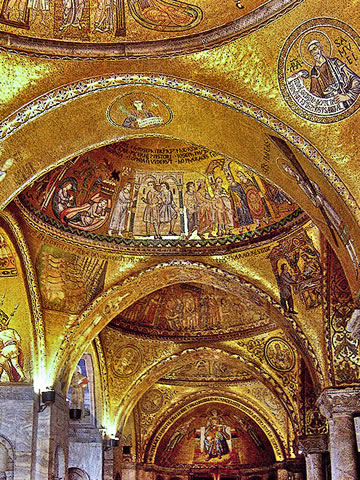
MORNING: In the morning, head straight to one of Europe's prettiest squares, the canalside Piazza San Marco. Wander the glittering mosaicked wonderland of its Byzantine San Marco cathedral and ride the elevator up the bell towerfor a sweeping view across the city and its canals.
Take the "Secret Itineraries" tour of the Doge's Palace at 10:45am for a behind-the-scenes look at Venetian history and intrigue from its Renaissance days as the world's trading and shipping powerhouse.
(It’s wisest to book this tour ahead of time, but not necessarily from home before you leave. Dropping by the afternoon before or even first thing in the morning before touring San Marco, should be sufficient. Still, just in case you want to be sure you get a ticket by booking in advance, I've spelled out the process here.)
AFTERNOON: Spend the afternoon however you’d like: shoppingfor Venice's famous glass trinkets, popping into more museums (my vote: the Ca' d'Oro, the grandest of the Renaissance palazzi along the Grand Canal) and churches, or simply have fun getting lost in the twisting, confounding, unspeakably beautiful back streets of Venice.
tip
If any of your days in Venice happens to be a Sunday, do not miss the 6:345pm mass in the Cathedral of St. Mark's—the only time they throw on all the light switches to illuminate all of those amazing gold mosaics.Another option (and a personal favorite): take off on a ferry for the outlying islands of Murano, where the glass industry started and a bit like a Venice in miniature, and Burano, a fishing village of riotously colored houses along miniature canals. It’s about an hour's ride out and back, and you should spend about an hour on each island.
If you time things just right, you should be motoring back to downtown Venice (and a celebratory canal-side final dinner) right as the setting sun sends sparkling streamers across the waters of the lagoon with the bell towers of Venice as a backdrop. Perfect.
Take a tour
If you prefer not to hassle with the public transportation (or a rental car) and want an expert guide, you have the option to visit Verona, Lake Garda, and Lake Como entirely on escorted tours. There are two options:
OPTION 1: Escorted daytrips: These all leave from Milan, so on Day 13 you would take a train there first thing, spend the rest of Day 13 seeing Milan itself—as outlined for "Day 14" (below)—then take the following escorted tours from our partners at Viator.com, one each on Day 14 and Day 15:
• Verona and Lake Garda Day Trip from Milan
• Lake Como Day Trip from Milan
OPTION 2: Three-day tour: There is also a three-day tour of Verona, Lake Garda, Lake Como, and Milan that leaves from Venice (actually, day 1 of this tour is just free time in Venice, so bascially it is a two-day tour—but it includes that hotel night in Venice, which is nice)—saving you ever more hassle:
• 3-Day Northern Italy Tour from Venice: Verona, Italian Lakes and Milan
OPTION 3: On your own: If you do choose to do it all on your own, you still might want to take one of these tours of Verona once you are there:
• Verona City Hop-on Hop-off Tour
• Verona Segway TourMORNING:It's time to leave the big cities behind for a bit and see some of the Veneto's highlights. The main train line from Venice to Milan (where you need to end up tomorrow) has trains every half hour and makes two equally compelling stops: Verona (of Romeo and Juliet fame) and Desenzano (gateway to Lake Garda).
Verona has many charms, but you need to limit yourself to just the highlights for the morning: take in the bustling marketplace on Piazza delle Erbe, and peek at nearby "Juliet's balcony" (in short: Shakespeare chose approximations of the names of two real rival families in Verona for his play, but the plot is, of course, made up—or, rather, stolen from the Greeks; all the Romeo and Juliet–associated "sights" in Verona are fanciful, but fun). Also take a look at the Arena, a midget Colosseum—and most perfectly preserved ancient Roman amphitheater in Italy—where they still perform operas. It's well worth sticking around town and getting a hotel if there's a performance on for the night tickets are still available (not an issue, in my experience, and I've been three times).
If there is an opera and you decided to attend, grab lunch on the go and take the train on to Lake Garda for the afternoon, returning to Verona for the show and (after a post-opera pizza at one of the restaurants across from the Arena) to spend the night.
AFTERNOON: No Opera? No problem. Feel free to linger a bit longer over lunch in Verona before continuing on to Lake Garda, where you will spend the afternoon and the night
Hop back on the train to Desenzano del Garda, where you can get a half-hourly bus to Sirmione, a pretty little medieval village-turned-resort (with the scenic ruins of a Roman villa) perched near the tip of an impossibly skinny peninsula jutting up into the massive Lago di Garda, largest of the Italian lakes.
Twenty minutes later, you'll be walking over the bridge, under the guard tower, and past the pocket-sized castle that guards this little medieval island-village. Find your hotel, drop your luggage, and take a stroll to eat gelato or simply sit at a café and watch the sun set beyond the lake's shores, the Alps glowing purple off to the north in the distance.
Take a tour
If you prefer an expert guide, here are some tours from our partners at Viator.com that cover many of the sights featured on this day:
• Skip the Line: Small-Group Milan Walking Tour with Da Vinci's Last Supper Tickets
• Milan Half-Day Sightseeing Tour with Da Vinci's Last Supper
• Private Tour: Milan Walking Tour
• Milan Brera Museum Walking Tour
• Milan by Night Tour
MORNING: Grab a—you guessed it—early train and get to Milan by late morning.
From Sirmione: The total ride (bus plus train from Desenzano del Garda) takes about 2 hr. The latest train you can catch that gives you enough time in Milan to make it worthwhile leaves Desenzano at 9:52am and gets in at 10:55am, after which there's a 2.5-hour gap until the next train (which wouldn't get you to Milan until early afternoon—too late to do much of use).
From Venice: The ride takes about 2.5 hr. I'd try for the 7:50am or 8:32am train. As above, the latest useful train leaves Venice at 8:50am and gets in at 11:25am, after which there's a two-hour gap until the next train.
From Verona: The ride takes 1.5 to 2 hrs. There are 2–3 trains per hour starting around 6am, but the latest useful run is the 10:05am, which get into Milan at 11:25.
The two biggies to see in Milan are Leonardo da Vinci's faded by still mighty Last Supper (yet another thing you really should book ahead), and the massive Gothic Duomo, its exterior studded with hundreds of statues bristling with pinnacles and spires (climb to the roof for a chance to step through and around the buttresses and spires, admire the statues up close, and get a great city panorama).
If you've the time (and you're not all museumed out by now), check out Milan's greatest painting gallery in the Brera. I also love the smaller but choice collection in the Pinacoteca Ambrosiana (Da Vinci, Caravaggio, Titian, Botticelli, and Raphael's cartoon sketch for the famed School of Athens in the Vatican).
If you're really lucky, you might be able to nab last-minute tickets for a performance at Milan's famed opera house La Scala tonight (lines form along the lateral arcade to the left of the main entrance; ask at the tourist office for details).
If not (or after the show), head out for a last supper of your own in the southern Navigli district of canals, once a big part of Milanese commerce but today turned into a hopping nightlife district, the old canals lined by dozens of restaurants, trendy bars, and nightclubs.
Take a tour
If you prefer an expert guide, here is a day trip to Lake Como from Milan with our partners at Viator.com:
• Lake Como Day Trip from Milan (9 hrs.)ALL-DAY: The easiest way by far is to take a guided day tour like the nine-hour Lake Como Day Trip from Milan, which visits the town of Como, with time for sightseeing, shopping, and lunch, then takes a cruise along the lake to the village of Bellagio before returning to Milan in the early evening.
If you want to go it alone on public transportation, hop a train at Milan's Stazione Centrale direct to the lakeside town of Varenna (1:03 hr.). There is a train only once every two hours, so try for the 8:20am from Milan so you're there by 9:23am.
In Varenna, wander the terraced gardens of Villa Monastero and Villa Cipressi, then board the 10:25am ferry across the lake to the postcard village of Bellagio. The boat takes only 10 minutes, giving you plenty of time to meet at Piazza della Chiesa 4, just up the main road from the port, for the 11am tour of the gardens and mansion of the famous Villa Serbelloni (you must book ahead: tel. +39-031-951-1555 or +39-031-950-204).
Splash out on lunch in Bellagio at Barchetta before moving on down the lake to the town of Como, famous for centuries for its fine silks. The bus is more frequent but slower (70 min). Faster and far more scenic is a Lake Como cruise (40 min.) along the lake's southwestern arm, sliding past elaborate villas surrounded by sumptuous gardens that run all the way down to the water's edge (www.navigazionelaghi.it). You might catch the 2:42pm ferry—which would give you more time in Como—if not, the next (and final) boat to Como leaves at 3:31pm (at 3:27pm on Sundays)
From Como's lakeside Piazza Cavour and adjacent Giardini Pubblici gardens, make your way to the town's main square, Piazza del Duomo with its statue-studded Gothic-Renaissance Duomo. South of here, amid the tangle of medieval alleys lined by wood-beamed buildings of shopping drag Corso Vittorio Emanuele II, rises the ancient church of San Fedele. Tucked into the city's southwest corner is the gorgeous Romanesque Basilica di Sant'Abbondio church, built in the 11th century and elaborately frescoed inside in the 14th century. In summer especially, you might have time to take a quick trip up the Brunate Funicular (Lungo Lario Trieste, tel. +39-031-303-608, www.funicolarecomo.it) on the northeast end of town for some spectacular lake views.
Though there are plenty of fine restaurants in town, my favorite is the simple home-cooking at the comfy, inexpensive trattoria favored by theater types, local ladies' auxiliary, and hometown soccer team: Ristorante Sociale (Via Rodari 6; tel. +39-031-264-042; www.ristorantesociale.it; closed Tuesday).
[This day is spelled out in more detail on the Lake Como in 1 day page.]
Stay the night in Como.
ALL-DAY: Most flights back to the U.S.leave either in the morning or early afternoon. Either way, the day's largely a wash. You'll spend the morning getting to the airport and the day in the air.
If you stayed last night in Milan, here are the details for getting to the airport.
If you stayed last night in Como, in the morning grab the Ferrovie Nord rail line (www.ferrovienord.it) from Como to Saronno, where you transfer (quickly! the trains don't stop for long) to another line out to Malpensa Aeroporto for your flight (2–3 trains per hour; total travel time: 60–80 min.).
Remember: Even if you have a 3pm flight, you have to check in by 1pm, which means you have to head to the airport by noon, which means you have to leave your hotel by 10:30... The day's pretty much shot by the time you wake up.
I hope you had a great trip. Try to catch up on your trip journal on the plane—oh, and be sure to grab some good plane snacks before you head to the airport (foccaccia's my favorite)—Italian food beats airline food any day of the week.
I'm all for planning your own trip‚ and this website is set up to help you do just that—but some people might just as well prefer to leave all the planning, logistics, transportation, lodging, and gathering of information to the professionals and simply sign up with a guided tour.
Nothing wrong with that. Just take my advice and choose a tour that emphasizes small groups over large crowds, local transport over big tour buses, and fun cultural experiences over sightseeing checklists. You'll have a better time, and probably spend less for it. Here are a few of my favorite tour companies who emphasize just that.
Lodging: Booking.com, Bedandbreakfast.com, Airbnb.com, Rentalo.com, Vrbo.com, Belvilla.com, Hostelworld.com, Hostelbookers.com, Couchsurfing.com, Homeexchange.com
Packages: SelectItaly.com, Gotoday.com, Orbitz.com, Expedia.com, Travelocity.com
Maps & guides: Amazon.com, Maps.google.com, Tuttocitta.it
A tall order for just two weeks? You bet. But there are two tricks to fitting all you can into such a short time here.
I will freely admit to being as guilty as anyone of this, but: Please try not to overplan your trip to Italy. That's a two-fold plea:
Share this page
Search ReidsItaly.com
Lodging: Booking.com, Bedandbreakfast.com, Airbnb.com, Rentalo.com, Vrbo.com, Belvilla.com, Hostelworld.com, Hostelbookers.com, Couchsurfing.com, Homeexchange.com
Packages: SelectItaly.com, Gotoday.com, Orbitz.com, Expedia.com, Travelocity.com
Maps & guides: Amazon.com, Maps.google.com, Tuttocitta.it



This article was written by Reid Bramblett and was last updated in February 2013.
All information was accurate at the time.
about | contact | faq
» THE REIDSITALY.COM DIFFERENCE «
åß
Copyright © 2008–2017 by Reid Bramblett. Author: Reid Bramblett



